Tigem’s core facilities combine advanced technology and scientific mentoring, accelerating growth and research for PhD students and postdocs.
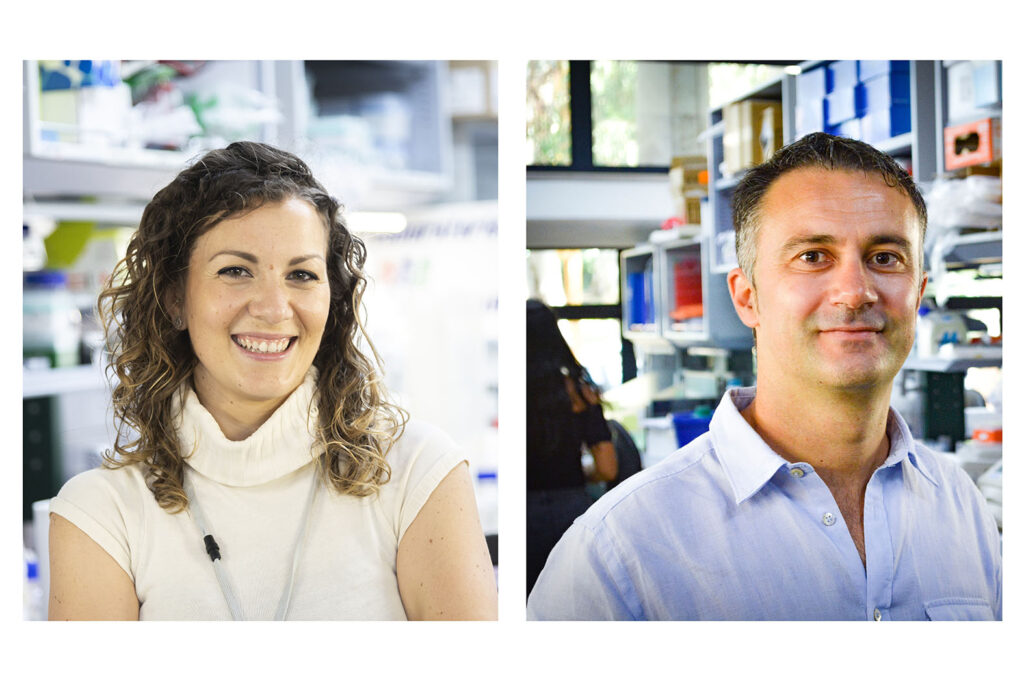
Advanced technology, shared expertise and daily scientific exchange: at Tigem, core facilities are not just infrastructure, but an integral part of an environment designed to nurture both researchers and ideas.
For almost thirty years, Tigem has been a key scientific hub within Fondazione Telethon’s research network. It is a place where the study of rare genetic diseases is translated every day into advanced research, technological development and the construction of concrete therapeutic pathways. Over time, the Institute has grown not only through its scientific output, but through its ability to build a structured, competitive and innovation-driven environment.
Here, research is not confined to the boundaries of isolated laboratories. It unfolds within a true scientific ecosystem, made up of research groups, interdisciplinary collaborations and an infrastructure that supports the entire journey — from basic cellular biology to molecular and translational therapies. The goal is clear: to understand the mechanisms that cause genetic diseases and to transform that knowledge into new therapeutic opportunities for patients, overcoming the historical barriers that often separate cutting-edge research from clinical practice.
It is within this framework that technological platforms take on their full meaning. At Tigem, they are not merely tools, but vital components of an ecosystem designed to stimulate talent, collaboration and professional growth.
Core Facilities: the heart of the TIGEM ecosystem
Within Tigem’s research ecosystem, technological platforms represent far more than advanced instrumentation. The Core Facilities are conceived as shared scientific infrastructures, deeply integrated into the daily life of the laboratories and into researchers’ training pathways — from the exploratory phase of basic research to the most advanced translational studies.
What truly distinguishes the Tigem model is the scientific approach that accompanies the use of technology. Each facility is not managed as an external service to which samples are simply “sent”, but as a space for continuous scientific dialogue. This allows research groups to go beyond the mere execution of experiments: they can discuss the scientific rationale, assess the relevance of specific techniques to the research question, and build robust and well-grounded experimental designs.
In this way, the core facilities become a genuine multiplier of quality, time and expertise. They enable researchers to work more efficiently by avoiding external bottlenecks, but above all they foster the development of new skills and a deeper understanding of the methods being used. Direct access to platforms such as advanced microscopy, high-content screening, in vivo support facilities and mass spectrometry does more than accelerate projects: it helps shape more autonomous, versatile and internationally competitive researchers.
This model is not the result of chance, but of a long-term strategic vision. As Paolo Grumati, principal investigator and Head of the Mass Spectrometry Facility, explains: “Tigem was a pioneer in Italy in creating structured core facilities, drawing inspiration from models already established in some major European research institutes. When this approach began, it was far from obvious to make such a wide and diverse range of technologies available to the entire Institute in a shared and stable way”.
A choice that has helped define Tigem’s identity as a place where technology is not an end in itself, but a tool in the service of scientific growth and the people who make it possible.
How a facility works: scientific leadership, technical teams and shared governance
At Tigem, each core facility is organised around a model that places scientific leadership and teamwork at its centre. Every platform is led by a principal investigator (PI) with strong expertise in the relevant technology, who uses it daily within their own research activity. This ensures that the facilities are constantly updated, aligned with the most current scientific needs, and embedded in a dynamic, evolving research environment.
Alongside the scientific lead operates a highly specialised technical team, responsible for sample preparation, instrument management and maintenance, and hands-on support for researchers. It is this staff that guarantees the quality and reliability of the analyses, guiding PhD students and postdocs in the use of the technologies and transferring skills that go well beyond a single technical procedure.
The functioning of the facilities is completed by a shared administrative management structure, common to all platforms, which handles organisational and bureaucratic aspects — from procurement and reporting to activity planning. This setup allows researchers to focus on scientific work, reduces the management burden, and makes access to technologies simple, efficient and seamless.
Interdisciplinarity and everyday collaboration
Beyond individual technological platforms, what truly defines Tigem is the way skills, people and scientific approaches intertwine in the Institute’s daily life. The core facilities do not operate in isolation. They are embedded in a broader context where scientific collaboration is the norm rather than the exception. It is this dense network of continuous interactions that transforms a collection of research groups into a genuine scientific ecosystem, capable of generating new ideas and unexpected solutions.
Ivana Trapani, now a group leader at Tigem after completing her entire training within the Institute, highlights the breadth of research areas as one of its most distinctive features. “At Tigem, you move from genomics to molecular mechanisms, all the way to therapy development”, she explains. “This diversity creates strong interdisciplinarity: it’s easy to interact with people working on problems very different from your own, and it’s often from these exchanges that new ideas emerge”.
In this setting, the facilities act as connective hubs between disciplines, rather than as simple technological services. Exchange happens informally and continuously, often outside structured settings — over a coffee, during an institute meeting, or while discussing experimental data. “It’s not just about talking to people in your own research area”, Trapani adds. “It’s about having daily access to very different skills and perspectives, which help you look at your project from entirely new angles”.
It is this collaborative dimension — built on physical proximity, constant exchange and cross-fertilisation of knowledge — that makes Tigem more than the sum of its laboratories. An environment where technology, expertise and human relationships reinforce one another, creating the conditions for shared scientific growth and for a way of doing research that naturally extends beyond disciplinary boundaries.
Less bureaucracy, more research: the role of the Scientific Office
A key factor that makes Tigem’s ecosystem particularly supportive for researchers is a network of behind-the-scenes support services that have a direct impact on the quality and sustainability of research. At the centre of this system is the Scientific Office (which also includes the Grant Office), which works alongside research groups at every stage of project design, funding management and reporting.
Its role goes far beyond support for national and European funding calls. It covers a wide range of activities, from administrative and regulatory procedures to the management of complex compliance processes. Permits for animal experimentation, exchange of biological materials, management of patient-derived cells, organisation of PhD programmes and scientific seminars: these are just some of the areas in which support staff enable researchers to focus on the core of their scientific work, reducing the operational burden that so often weighs on academic research.
As Paolo Grumati points out, “This kind of structure is far from marginal — it represents real added value. Knowing that you can rely on solid, continuous support allows PhD students, postdocs and PIs to work in a stable environment, where the feasibility of projects is not undermined by administrative or managerial uncertainty”. This becomes particularly important for those at the early stages of their scientific careers, who are learning to navigate the complex intersection between research, project design and funding management.
In this sense, the Scientific Office and support services form a kind of invisible infrastructure of the Institute: less visible than the technological platforms, but just as essential in creating an environment where research can develop in a continuous, effective and long-term-oriented way.
A gateway to the world: the numbers behind Tigem’s internationalisation
Data on Tigem’s alumni — meaning former PhD students and postdocs trained within the Institute — clearly reflect its strong international dimension. Today, 63% of alumni work abroad: 21% in the United States, 23% in Europe and 19% in other countries, confirming how the experience gained at Tigem opens up solid, globally recognised career opportunities.
The same international outlook is evident in current training pathways. Tigem is embedded in a global network of doctoral programmes and is further strengthening this vocation. Alongside the 37 PhD students currently active (including 3 international students), new recruitment is underway through an MSCA doctoral programme, which will bring 5–6 new international students in the coming months. This will further expand diversity, mobility and the circulation of expertise. These figures describe an Institute that not only attracts talent but is able to accompany researchers towards fully international scientific careers.
Why this matters for the researchers of tomorrow
For those entering the world of research today, choosing where to train and grow is not just about identifying a scientific field of interest. It is about finding an environment capable of supporting long-term professional development. At Tigem, technological platforms, the organisational model of the core facilities, interdisciplinary collaboration and research support services combine to create an ecosystem in which ideas can more rapidly become robust projects and high-quality scientific results.
In this environment, technology is not an endpoint, but a shared tool; bureaucracy is not an obstacle, but a managed process; collaboration is not occasional, but embedded in everyday practice. It is this combination of infrastructure, expertise, relationships and support that makes Tigem a place where PhD students, postdocs and early-career researchers can fully express their potential, gain scientific autonomy, and build a competitive international profile.
Looking ahead, investing in research environments that truly integrate technology and people becomes a fundamental condition for attracting and training the next generation of scientists. This is the long-term vision embodied by Tigem: not only as a centre of excellence in rare genetic disease research, but as a space for growth, where science develops together with the people who make it possible.
